Home / History of Sapri and Pisacane
History of Sapri and Pisacane
Updated: 21 October 2026
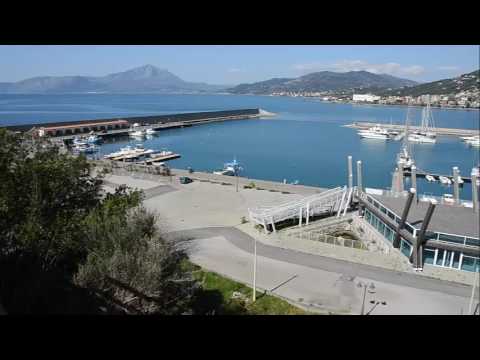
Sapri’s history connects prehistoric occupation, a Roman maritime villa, the growth of a coastal town and the 1857 Pisacane expedition. These layers can still be explored through the places around the bay.
Before Pisacane: a long-settled coast
Sapri’s name immediately recalls Italian unification, but the area’s history begins much earlier. Archaeological evidence from the coast and hills points to prehistoric occupation: caves, shelters and places near watercourses provided resources and settlement opportunities. Cartolano and inland sites help reveal the bay as part of a long-inhabited landscape.
Its position on the Gulf of Policastro connected the sea with the interior. This relationship is more useful for understanding the area than relying on a single legend about its name.
The bay in Roman times
The most recognisable ancient traces are the maritime villa at Santa Croce and structures around Cammarelle. A residential complex on the shore shows how the gulf formed part of the Roman coastal landscape, with buildings facing the sea and activities linked to the bay.
The villa should not be imagined as an intact building. Over the centuries the landscape changed, and evidence was incorporated into later structures, altered or lost. The surviving remains are valuable because they reveal fragments of the ancient shoreline within today’s town. Its archaeological significance does not depend on attributing it to an individual emperor.
From maritime settlement to town
In later centuries, settlement remained connected with the sea, hill towns and coastal defence. Marinella, religious buildings and coastal towers tell different parts of this relationship: everyday life, the religious community and surveillance of the shore.
Modern Sapri preserves these layers alongside later changes. The seafront, railway station and services strengthened its role within the gulf. Around the turn of the twentieth century, benefactor Giuseppe Cesarino helped give the town distinctive buildings, including Santa Croce and Casa del Buon Pastore.
Carlo Pisacane and the revolutionary plan
In 1857 Italy was not yet a unified state and Sapri belonged to the Kingdom of the Two Sicilies. Carlo Pisacane, a Neapolitan republican patriot, believed political transformation should involve the population directly and bring social change. The expedition was intended to launch an uprising, relying on supporters expected to prepare the ground.
It was more than a military raid: the plan assumed the landing would trigger wider participation. The gap between that expectation and reality helped cause its failure.
From Genoa to Ponza and Sapri
On 25 June 1857 Pisacane and a small group left Genoa aboard the steamship Cagliari and took control of it. Giovanni Nicotera and Giovan Battista Falcone were among the participants. Despite failing to receive an expected arms shipment, they continued towards Ponza.
Prisoners were freed on the island, and many joined the expedition. Now numbering several hundred, the group reached Sapri in late June. The landing place had been chosen with inland connections and potential support in the Cilento and neighbouring areas in mind.
The missing support and the end at Sanza
The landing did not produce the hoped-for uprising. Local preparations proved insufficient, and the expedition’s composition also complicated its relationship with residents: those who had joined at Ponza were predominantly soldiers under punishment and prisoners held for ordinary criminal offences, rather than a cohesive group of patriots. Local suspicion therefore cannot simply be dismissed as hostility to freedom or Italian unification.
After fighting near Padula, the survivors retreated towards Sanza, where Pisacane died on 2 July 1857. Nicotera survived and was imprisoned. The expedition exposed the fragility of attempting to trigger a revolution without effective local support. Later commemorations celebrated the participants’ sacrifice, but should not conceal organisational and political errors or assume that the revolutionaries’ objectives matched the expectations of the communities involved.
Debate about the subsequent unification
The merits of these initiatives remain a subject of historical debate. Alongside celebratory accounts of Italian unification are critical interpretations of their aims, methods and actual involvement of local people. The debate also concerns the subsequent unification process: according to influential historical interpretations, the rapid extension of Piedmontese institutions, fiscal policies and military repression contributed to worsening conditions in the South. Acknowledging these problems does not mean attributing every imbalance to unification, but distinguishing the ideal from the way it was implemented.
The Gleaner: poetry and memory
Luigi Mercantini turned the expedition into one of the best-known poetic narratives of Italian unification. In The Gleaner of Sapri, events are seen through a young woman gathering ears of grain, a literary device that brings readers closer to the participants and their fate.
The poem is not a chronicle and its protagonist should not be mistaken for an identified historical witness. The Three Hundred became a symbolic image: not all members of the expedition died. Sculptures, the Pisacane monument and the town’s historical re-enactment show how a political and military failure became part of Sapri’s identity.